


Knowing how to dehydrate eggs is a handy skill to have for just about anyone, but even more so for those with chicken coops at home. If you have more eggs than you can reasonably eat while they’re fresh, turning them into powdered eggs can extend their shelf life up to about one year while preserving their nutritional value.
Dehydrated eggs are also ideal foodstuffs for backpackers, hikers, and campers, because they’re lightweight and don’t need to be refrigerated. While it’s true that you can buy powdered eggs pretty readily, it’s always nice to know how to make egg powder at home and add another option to your food storage plan.
In this post, I’ll describe two methods you can use to dry and preserve eggs at home. Both options have pros and cons, but whichever you choose to use, you’ll need a food dehydrator. (Check Costco — I got mine there for around $40!) This is one small appliance you can get a lot of use out of, because there are a lot of dried foods that are useful to keep in your pantry!
How To Dehydrate Eggs In A Dehydrator
The first method I’ll walk you through involves dehydrating scrambled eggs, which is a relatively quick and worry-free process. It’s perfect for camping or backpacking, because you only need to rehydrate them in hot water and heat then through in a pan.
The second method uses raw fresh eggs, so it takes quite a bit longer than the first method. However, there is one major advantage to dehydrating raw whole eggs — they closely resemble the texture of a raw egg when reconstituted, so they’re excellent for recipes!

Method #1: Use Cooked Eggs To Make Powdered Eggs
Crack half a dozen fresh eggs into a bowl, whisk thoroughly, then cook the eggs in a nonstick pan without oil or butter. (Any added oil or fat will greatly reduce the shelf life of your dehydrated powdered eggs, causing them to go rancid much earlier than they would otherwise.)

When the cooked scrambled eggs are cool enough to handle, place the eggs onto your dehydrator trays, breaking up any large chunks for quicker drying. Set your food dehydrator to 150 degrees F (or medium heat), then let it run for about 4 hours or so. Check the eggs at regular intervals by squishing a piece between your fingers — if it doesn’t snap, it’s not dry enough!

When the eggs are dehydrated sufficiently, transfer them to a blender or food processor and grind the eggs into a clump-free powder. (If they seem gummy or aren’t grinding well, you probably need to dehydrate the eggs for a while longer.) For long-term storage, transfer your powdered eggs to an airtight container where they will keep for about a year.

These dehydrated eggs are a great way to have quick, high-protein breakfasts when camping or backpacking. To use them to make scrambled eggs, just add hot water, stir the eggs, and let them reconstitute for 5-7 minutes. Finally, heat them through (and this time you can use all the oil, butter, and add-ins you like!)
Method #2: Use Raw Eggs To Make Powdered Eggs
If you are drying eggs to use in baking, this is the best way to dehydrate them!
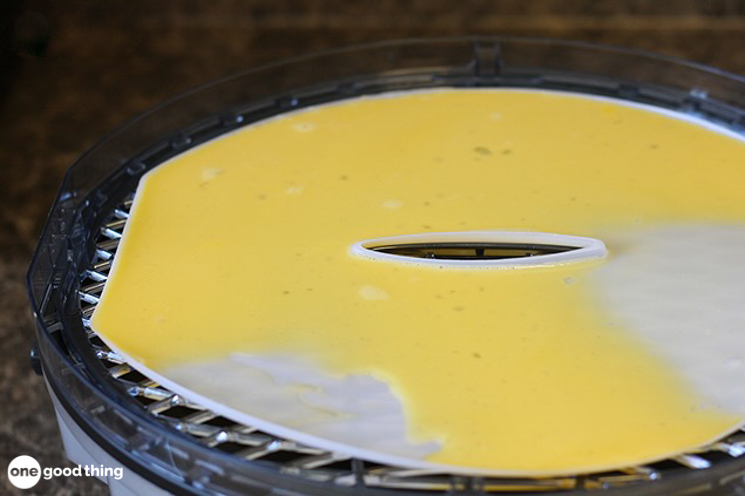
Whisk around half a dozen eggs, then slowly pour them onto a jelly roll sheet on one of your dehydrator racks. (Some jelly roll sheets will only hold around 5 eggs — if you want to dehydrate more eggs per batch, consider buying a few extra jelly roll sheets for your dehydrator — they’re great for making fruit leather!)

Set your dehydrator to 135 degrees F (or low heat) and let it run for about 12 hours. (It may take more or less time, depending on where you live — here in arid Utah, it takes about 10 hours.)
When thoroughly dried, put the dry eggs in a food processor or blender to grind them up into a powder. Again, if the dried eggs seem gummy, they’re probably not dry enough.
Note: Because this method uses raw eggs, it is important to use either pasteurized eggs, or high-quality eggs from a trusted source, like a local farm or your own backyard.
More Ideas You'll Love


How To Use Dehydrated Eggs
To reconstitute previously cooked dehydrated eggs, combine one heaping tablespoon of egg powder with 2 tablespoons of hot water for each egg desired. Let the eggs rehydrate for about 7 minutes, then heat through on your stovetop.
To reconstitute raw dehydrated eggs, add 2 tablespoons of water to one heaping tablespoon of egg powder for each egg desired. Stir and let sit for 5 minutes — if using the eggs for baking, they’re ready to go! If you want to prepare them as scrambled eggs, use a blender or immersion blender and whip some air into them first — they’ll have a much nicer texture! To make them taste even better, add a fresh egg for every two or three tablespoons of dried eggs before cooking.
NOTE: Regardless of which method you used to dehydrate your eggs, the rehydrated eggs need to be cooked before you eat them. The temperature of your dehydrator isn’t high enough to kill salmonella, so be sure to fully cook them after rehydrating them so they’re safe to eat.
Have you ever tried dehydrating eggs?





You can actually buy the Egg Substitute in the Gluten Free section of stores. The store l worked for carried it. We had some people that used it for breading for meat. I have no idea if what they bought was like Jillee’s powdered eggs.
Please log in or create a free account to comment.Eggs cannot be safely put in your dehydrator. Full stop.
Please log in or create a free account to comment.“But what if I…” Nope, sorry may be less risky, but still not safe.
“But my grandma….” Food safety procedures have changed since her day. Also the woman who trained me’s grandma got away with the old procedures for 90 years. But in the end she died of food poisoning from her home processed foods.
I know there are directions out there for doing eggs or egg based foods in dehydrators, some of them from dehydrator manufacturers even. Does not make it safe.
“I know there are people who’ve done it for 20 years and it hasn’t killed them” … yet.
Just because it isn’t always going to make someone sick doesn’t mean it’s never killed someone. We don’t want the next someone to be you or someone you love.
I Julie,
Please log in or create a free account to comment.Wow, thank you for how to make powdered eggs.
My questions are 1 when I reconstitute powdered eggs recipe. Is it for 1 egg?
and will they be like scrambled eggs? Can you make egg salad sandwich with it?
Now I just need to figure out what I will use the powdered eggs for. lol
I’ll be the fly in the ointment for us all… is anyone concerned about the fact that the temp of the dehydrator is not hot enough to kill salmonella or bacteria for the raw eggs? I mean, i know they are dried, but that’s only going to cause the virus/bacteria to lay dormant until reconstituted… Can anyone help me out here? Kinda leery…
Please log in or create a free account to comment.I tried the raw egg dehydration before but found them grainy when reconstituted and cooked. BUT I believe where I erred- I did not let them sit and reconstitute long enough AND I did not put them in the blender/food processor after drying. So Jillee, I will give it another shot…. We have 14 chickens and this time of year I an inundated with eggs. Thanks!
Please log in or create a free account to comment.Great info with raw vs. cooked. I saw another piece like this a while back and it recommended putting the cooked eggs on a cookie sheet at low heat for a couple hours, then proceeding as above. I don’t have a dehydrator, so that’s what I’ll be doing.
Please log in or create a free account to comment.I would love to know how it turns out in the oven. I don’t have a dehydrator either.
Please log in or create a free account to comment.It’s the same thing, low heat, over extended time, evaporating the moisture from the food. Dehydration, or oven it is almost exactly the same type of process.
At the risk of giving away my age I have to say that I remember powdered eggs from my childhood in London during the War. (The War…WWll) They were the only eggs we ever got and they were rationed like everything else. Memory Lane.
Please log in or create a free account to comment.This is very good information to know. I remember my mom buying some from a,dry- pack cannery in our area many years ago.
Please log in or create a free account to comment.I’m nit sure if was from our churches cannery.
I’m glad to know how to do diy stuff, as,with the
Government shutting down most of the facilities
We are more limited as to what products are
Available to us.
Well, this is sure cool to know! I would appreciate more info also on how to use them in cooking–especially cooked vs raw. . .
Please log in or create a free account to comment.Now that we have powdered eggs – do you have any recipes for them? Thanks Jillee
Please log in or create a free account to comment.Sprinkle them in soups and sauces for added flavor. I sometimes garnish with powdered eggs for added color and flavor boost. Oven method works fine and definitely cook them first and refrigerate or freeze the powder.
Please log in or create a free account to comment.Thank you, Jillee, for sharing this with us. I’m trying to become more self-sufficient and this is one more step in that direction. I really hadn’t even thought about it before.
My wonderful daughter-in-law has chickens in her back yard and I’m going to pass this along to her for future reference.
Hope you have a bright, sunshiny day!
Please log in or create a free account to comment.When using these for baking, does either type work in the recipe. What about recipes where you need/expect a rise, like cakes?
Please log in or create a free account to comment.If you’re using them for something that needs to rise, I would defintely use the raw eggs. The cooked eggs would be fine for things like cookies or pancakes that don’t need much rising action. :-)
Please log in or create a free account to comment.I am amazed! The shelf life of eggs has gotten so short that I wonder where these eggs have been before they are on the shelf to buy! I don’t want to buy less than a dozen as my cooking and baking runs in streaks and I hate to be out. I just purchased a dehydrator and have been do some. I feninately will try this. Any other recipes for the dehydrator would be greatly appreciated! Some of mine were thrown out…ugh.
Please log in or create a free account to comment.You can find a lot of recipes for dehydrating food. Just type in what you are interested in dehydrating and add How to dehydrate somewhere in there. It will come up on the internet. Right now I have several trays of watermelon dehydrating.
Please log in or create a free account to comment.Wow. I never would have guessed you could do this! Thanks for bringing all these random odds and ends of goodness to all of us. : )
Please log in or create a free account to comment.Jillee, this is something I’d not thought about before, but what fun to learn about it! Makes me want to go play mad scientist in my kitchen and try this. Thanks for another creative idea.
Please log in or create a free account to comment.Great post! Another place to store these eggs is in your emergency food & supplies box.
Please log in or create a free account to comment.Could you use these in those cute mason jar recipes? We have a whole book on coffee cup cakes but they all call for an egg. We want to make up a mix in a bag and put it in a cute coffee mug for a gift but we don’t want the gifted to have to add a lot of ingredients.
Please log in or create a free account to comment.That sounds like a fantastic idea. you would have to adjust the directions to include that bit of extra to reconstitute the egg. I would only do the raw egg method and I would have to do a test run at home to see the end result before giving it as a gift.
Please log in or create a free account to comment.Great. I have never seen a recipe for powdered eggs so this is wonderful. We have chickens so always have lots of eggs. Thanks so much.
Please log in or create a free account to comment.When you add the water do you cook them again?
Please log in or create a free account to comment.Do you store the powdered eggs in the pantry or frig?
Evelyn, you don’t need to cook them again after adding the water. :-) And you can store them in the pantry!
Please log in or create a free account to comment.Brilliant, don’t know if I will use it but great thing to have to hand just in case & so easy. Who would have thought it. Thank you.
Please log in or create a free account to comment.funny how this post is pretty much the same as the one I found online.
Please log in or create a free account to comment.I’m sorry, I missed what you thought was funny. There are only about so many techniques for drying eggs. … eventually they will be repeated somewhere by someone. The blogger is introducing the concept to HER audience, which I suspect most have never considered before.
Please log in or create a free account to comment.I definitely hadn’t and found it helpful. Obviously Jillee didn’t invent this but passing it along to the many people who’ve never done this! I had no idea it was that simple. I probably won’t do it, but find it good to know!!
(You mean this one? :) http://www.theprairiehomestead.com/2011/12/how-to-dehydrate-eggs-or-not.html#sthash.L8rFXE1K.roVWpfwl.dpbs
Please log in or create a free account to comment.When you reconstitute the eggs, the first one was cooked first, do you have to cook them again like for scrambled eggs?
Please log in or create a free account to comment.The second one was dried from uncooked eggs, after reconstituting then you cook them? I have never seen powered eggs in the market so this is new to me but i can use the process as i don’t eat eggs that often and it would be good to do this when they will be getting old.
Have you reconstituted the dried raw eggs and then cooked them? How did they turn out?
Please log in or create a free account to comment.The dried raw eggs cook wonderfully after reconstituting! Fluffy and delicious. :-)
Please log in or create a free account to comment.How do you cook the powdered eggs
Thank you